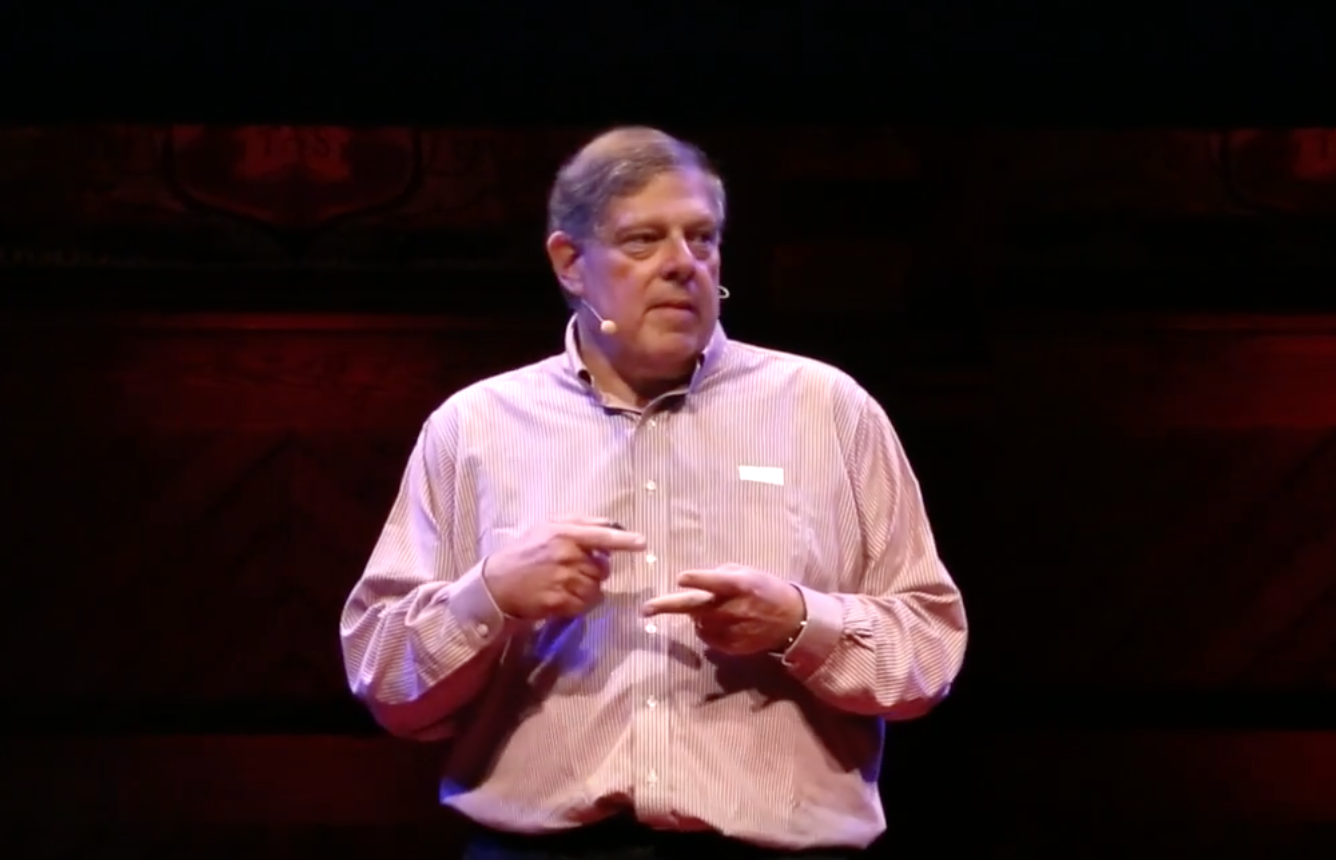
Politico: Poll: Surprising demand for immigration reform, says Mark Penn

By MARK PENN
August 15, 2010

It’s not news in this poll that Congress receives poor marks for its overall performance, given the state of the national economy, but what is a surprise is that solid majorities of the public and overwhelming majorities of DC elites want some kind of comprehensive immigration legislation passed now.

The scarcity of jobs, the growth of the Latino vote and the legislation in Arizona have all contributed to creating an atmosphere in which the public says that progress on this issue is overdue.

View the full results from Penn Schoen Berland’s poll, the second of six in Politico’s “Power and the People” poll series

Fifty-nine percent of the general population wants to see action on meaningful reform and so do 76 percent of DC elites. More notable in today’s partisan climate is that reform gets the nod from Democrats and independents in equal measure (61 percent of both think Congress should “pass comprehensive immigration law guidelines now”) and that 59 percent of Republicans agree as well.

Read Full Article

Mark Penn’s Microtrends wins WPP Atticus Award

Penn Schoen Berland and Burson-Marsteller CEO Mark Penn has been named the winner of the Consumer Insights category in the 2010 Atticus Awards for his book Microtrends: The Small Forces Behind Tomorrow’s Big Changes, PSB announced today.

Open exclusively to professionals working in WPP companies, the annual Atticus Awards honor original published thinking in communications services. Winners receive a cash prize, and many recognized publications are reprinted or excerpted in WPP’s annual Atticus Journal, which will be released in November 2010.

The Awards were judged by Simon Clift, consultant and former chief marketing officer at Unilever; Rik Kirkland, principal and director at McKinsey & Company, and Judie Lannon, editor of Market Leader. Other entrants in this year’s Consumer Insights category included publications from WPP agencies Millward Brown, MVI, and Mindshare.

“I’m deeply honored that Microtrends has been recognized as one of the outstanding examples of WPP’s thought leadership from the last year,’ said Penn. “At Penn Schoen Berland and Burson-Marsteller, much of our work is predicated on the belief that companies must understand and respond appropriately to small shifts in behavior – as harbingers of tomorrow’s big shifts. We are gratified that WPP and the judges of the Atticus Awards have endorsed that perspective.”

The Atticus Awards specifically recognized the paperback edition of Microtrends: The Small Forces Behind Tomorrow’s Big Changes, by Mark Penn with E. Kinney Zalesne, published in June 2009 by Twelve.

Download press release

Politico: Watch the Obama reelect numbers, says Mark Penn

By MARK PENN
July 18, 2010

By far, the most alarming numbers this poll presents for President Barack Obama are the reelection figures; against a generic Republican candidate, he loses by 5 points, 37-42. In general, when an incumbent’s reelect numbers fall below 50 percent, it’s a sign of trouble to come — and Obama’s inability to break even 40 percent may be the most telling indicator to come out of these data.

View the full results from Penn Schoen Berland’s poll, the first of six in Politico’s “Power and the People” poll series

Americans like Obama — despite nearly 10 percent unemployment and two ongoing wars, his 49 percent favorable rating remains much stronger than some of the low points hit by Presidents Bill Clinton and George W. Bush. But what is surprising is the 11-point gulf between his favorable (48 percent) and reelect ratings. This suggests a lot of voters are saying, “I like him personally” but not “I would vote for him again.”

Read Full Article

The Washington Post: Mark Penn answers “Topic A”: What should Obama focus on next?

The Washington Post asked political experts where the administration should focus before the midterm elections.

MARK PENN
Adviser and pollster to President Bill Clinton and then-Sen. Hillary Clinton; CEO of Burson Marsteller

Between now and the midterms, the administration has to focus on what it can do to provide a sense of economic recovery. Perhaps the best arena for that is in an energy bill that creates a wide array of incentives to produce new forms of energy.

The administration should not make the energy bill principally about climate change. The truth is the economic slowdown has done more to help with climate change than any bill is likely to accomplish in the near term. America wants clean, non-imported, sustainable energy — and at the same time wants to continue to use all available natural resources here and abroad to keep energy prices down. Even after the BP spill, Americans still support offshore drilling.

There is no way an immigration bill would get done before the midterms, and though the issue tends to fracture the Republican Party, turnout in the midterms suggests that this would not be the ideal time to try to tackle that tumultuous subject.

At this point the deficit is so high that a new round of stimulus would just be putting a target on the back of the administration.

Unemployment benefits need extension. Right now there is no estate tax and won’t be unless Congress acts to do something about it. Those are both issues the administration should continue to press.

But the economy and energy are where the administration has to put its legislative bets while it seeks to minimize midterm losses so it can come back from them and keep the country moving forward.

Read Full Article

The New York Times: Mark Penn answers “How Can Obama Rebound?”

How Can Obama Rebound?

Though BP managed to stop the spread of oil from its broken well last week, President Obama has been able to do little to stop the drop in his public approval ratings, which now, according to a new ABC News-Washington Post poll, hover just above 40 percent. Add these numbers to the comment by Robert Gibbs, the president’s press secretary, that Democrats could lose control of the House in the November elections, and it equals trouble for the president in 2012. So what does Mr. Obama need to do to shore up his base, woo back independent voters and win a second term? The Op-Ed editors asked political experts to suggest a few plans of attack.

Middle Man
By MARK PENN, adviser and pollster to the 1996 Clinton campaign and chief executive of Burson-Marsteller

The most important thing President Obama can do, as Bill Clinton did during his first term, is retake ownership of the center — the voters who elected him but now feel he has moved too far to the left. That means making a real down payment on the deficit, revamping the health care act to address the cost issue, opening up new markets overseas and creating jobs by promoting innovation through spending on basic research.

Rather than cut the space program, he should double its size. He should make sure that every American with a broadband connection has access to online education. He should offer research grants and tax incentives to promote investment in our coal, natural gas and biofuel resources, as well as wind and solar energy.

Voters will re-elect President Obama only if they believe that America is on the move, creating and building things. Homeownership is still a vital part of the American dream and must remain a goal of his administration, despite the housing crisis. And he should work with both parties to come to a reasonable compromise on immigration reform, one that would create a clearer path to citizenship for undocumented immigrants and effectively control the borders.

After the midterms, President Obama will likely face the same decision that President Clinton faced in 1994 — to stay the course on the left or return to the center. His choice could be the difference between a one-term presidency and four more years governing with the coalition that elected him.

Read Full Article

The Huffington Post: Poll Shows People Support Checks and Balances, But Want More Limits on Supreme Court Justices

By MARK PENN
Published July 9, 2010

Despite their support of checks and balances and desire for minimal changes in the Constitution, the American public favors a series of populist changes in our system of government, according to the results of a poll on the US Constitution prepared by Penn Schoen Berland for the Aspen Institute and released today at the Aspen Ideas Festival. Initiatives receiving public support include direct election of Supreme Court justices, elimination of the Electoral College, and the addition of amendments by national referenda.

The poll suggests that, while the public may be dissatisfied with recent administrations and the partisan political environment, they remain reasonably satisfied with the governmental framework set out in the Constitution. By 64 to 19 they endorse the system of checks and balances as necessary to prevent one branch from dominating the Government.

Freedom of speech was seen as far and away the single most important right guaranteed by the Constitution, and, as a corollary, only 28 percent believe the press has too much freedom. The poll covered well over 100 questions on the details of the constitutional system of government and was conducted with over 1000 Americans. The complete presentation is available below.

Read the Full Article at the Huffington Post

Politico: Don’t let midterms take us back, says Mark Penn

Politico

By MARK PENN
July 6, 2010

The country is likely to go into the midterms divided and dissatisfied — conditions unlikely to produce good news for the Obama administration.

But just how bad the news could be remains uncertain. Successfully reducing and deflecting the damage could make a huge difference in the political landscape — and the administration’s future.

Many key variables are set: Unemployment is stuck at more than 9 percent, most Americans have a negative view of the health care bill, the deficit continues to skyrocket and the war in Afghanistan is not going well. Independent movements, like the tea parties, are spreading like wildfire, and the president’s approval ratings can’t seem to break 50 percent.

All in all, it could take a political Houdini to get out of this mess.

The administration’s plan, so far, seems to be to blame Wall Street for the economic mess, the health insurance industry for rising health care costs and BP for the oil spill and its protracted damage. President Barack Obama has blamed Republicans for the gridlock and a divided country.

But it is going to take a lot more than the blame game to cut electoral losses to acceptable levels. Democrats could lose 25 seats in the House and four Senate seats and still call it a midterm victory. But the fear is real that unless there are strategy changes, Democrats could lose a lot more.

Read Full Article

PRWeek: Mark Penn on PRWeek’s 2010 Power List 25

Mark Penn ranks #13 on PRWeek’s PR Power List of the 25 most powerful leaders in the communications industry in 2010.

Mark Penn
Worldwide president and CEO, Burson-Marsteller

Love him or hate him, public affairs guru Mark Penn has the ear of some of the most powerful people in the world, having worked with luminaries such as Bill Clinton, his wife Hillary, and former British Prime Minister Tony Blair.

In terms of Washington power brokers, Burson-Marsteller’s Penn stands right at the top of the food chain. His challenge is to remain relevant and influential in a rapidly changing global political climate, and to lead his Burson- Marsteller empire from the front and ensure key staff members come along for the ride.

Download the PR Power List 2009 (pdf format)

GW’s Graduate School of Political Management To Host Mark Penn And Karen Hughes To Discuss 2010 Midterm Elections (June 29)

George Washington University’s Graduate School of Political Management To Host Prominent Political Strategists Mark Penn And Karen Hughes To Discuss 2010 Midterm Elections, June 29

Event Moderated By “Politico’s” Mike Allen

EVENT:
The 2010 midterm election season is upon us. With less than five months before ballots are cast, already several races have made for a lively election season. GW’s Graduate School of Political Management will host prominent political strategists Mark Penn and Karen Hughes for a conversation about and predictions of who will win and who will lose in November. Questions for Mr. Penn and Ms. Hughes can be submitted via Twitter by sending a Direct Message to @gspmgwu.

WHEN:
Tuesday, June 29, 2010; 10 -11 a.m.

WHERE:
The George Washington University
The Jack Morton Auditorium
805 21st St., NW
Washington, D.C.
Foggy Bottom-GWU Metro (Orange and Blue lines)

RSVP:
Tickets are required for this event at no cost to attendees. Visit www.gspm.org/2010 to register. Members of the media should RSVP to Emily Cain at eecain@gwu.edu or 202-994-3087.

Washington Post: From the US to the UK, new political winds, writes Mark Penn

From the US to the UK, new political winds

By MARK PENN
Published May 6, 2010

Thursday’s elections in Britain could be a harbinger of what is likely to come to America in the not-too-distant future: new movements and even parties that shake up the political system. Cleggmania shows that even the most tradition-bound electoral systems are facing the pressures of rapid change made possible by modern communications. These movements may not win out of the gate, but they will become significant political factors.

While the Constitution established three branches of government, the system of political parties grew up outside of that, securing itself through what were at first formidable local infrastructures and later with skillful redistricting, ballot-access laws and contribution limits that worked to preserve the status quo. In the 1940s, this really was a red or blue country, with about 85 percent of voters identifying as Republican or Democratic. Today, about 40 percent of Americans are political nomads, wandering from party to party in search of a permanent home. They peer at more than 100 varieties of coffee drinks at Starbucks and wonder why they have only two bipolar choices in politics.

Read Full Article

--->